How to Choose the Best Dolphin Robotic Pool Cleaner
The best Dolphin robotic pool cleaner is the model that matches your pool size, surface, shape, debris load, cleaning expectations and preferred level of automation.
Choosing only by price or feature count can lead to a poor match. This guide explains the practical differences between Dolphin models so you can shortlist a cleaner that suits your pool, your routine and your budget.
Quick Checklist Before Choosing
- Measure the maximum pool length and note the deepest point
- Identify whether you need floor-only, wall or waterline cleaning
- Consider steps, ledges, slopes, benches and other obstacles
- Match the filtration system to leaves, dust or mixed debris
- Decide whether app control, scheduling or cordless operation matters
- Compare weight, lifting, water release, storage and local service support
Start with the Type of Cleaner You Need
Simple Everyday Cleaning
Choose a lighter, straightforward model when reliable one-button cleaning and easy handling are more important than advanced controls.
Smart Full-Pool Cleaning
Compare app-controlled models when you want scheduling, cycle options and floor, wall or waterline cleaning.
Cordless Cleaning
Consider a Liberty model when cable-free handling, pool access or operation around obstacles is a priority.
Why Choose a Robotic Pool Cleaner?
A robotic pool cleaner operates independently from your pool pump and filtration system. It uses its own motor, brushes, filtration and navigation, with power supplied through a low-voltage power supply or battery, depending on the model.
Debris is collected in the robot’s own filter basket, cartridges or bag. The pool’s circulation and water treatment still need to operate as required.
Pool Size Should Guide Your First Shortlist
The first question is simple: how long is your pool? Dolphin models are designed around recommended pool lengths, so this is one of the easiest ways to narrow the range.
- Check the recommended maximum pool length and cleaning coverage for each model, starting with options such as the Dolphin DB1 and Dolphin S1000.
- The Dolphin S2000 and Dolphin S3000 are Pooltronics’ best-selling, highly recommended models. Confirm suitability for your pool before choosing.
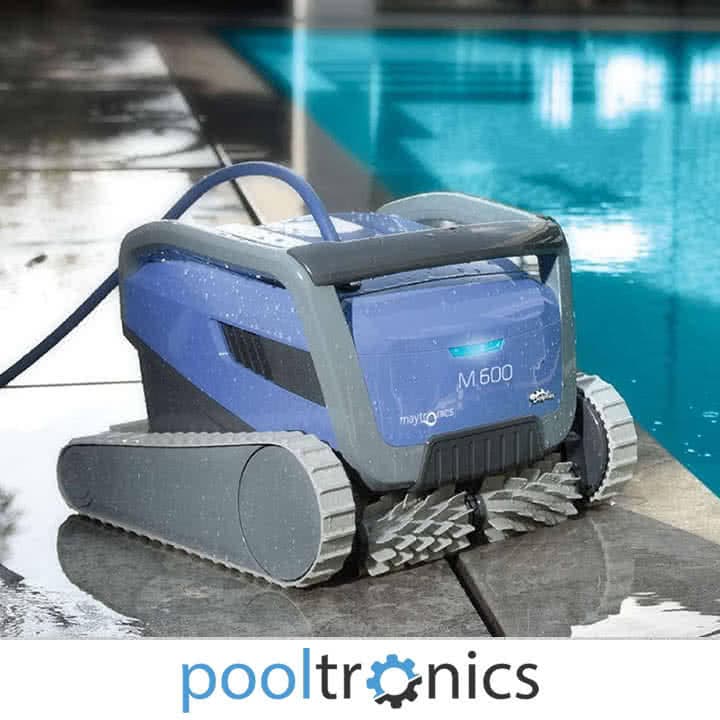
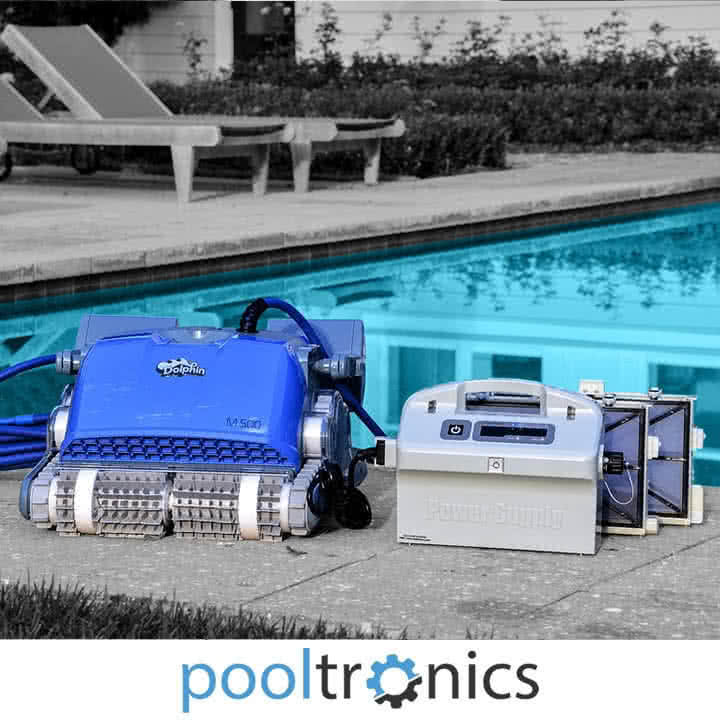
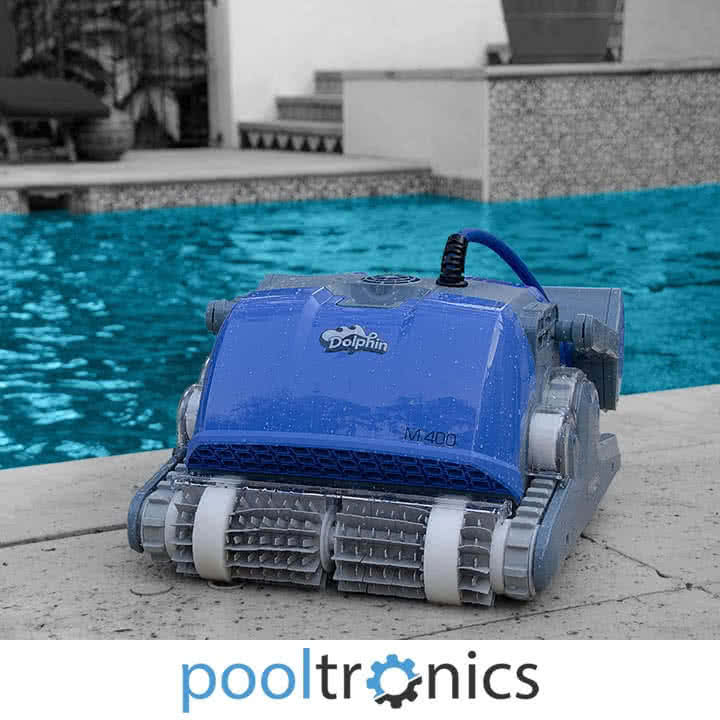
- Compare the M400, M600 and Liberty 600 against your required coverage, handling and controls rather than assuming a higher-priced model is a better fit.
Consider the Pool Surface and Shape
Record the pool surface, shape, depth and any steps, benches, ledges or beach entries. These features need model-specific assessment; advanced navigation or cordless operation does not guarantee that every area will be cleaned.
Ask Pooltronics to check suitability for unusual slopes, obstacles or shallow zones before selecting a model.
Match Filtration to the Debris in Your Pool
Dolphin robotic pool cleaners may use filter baskets, cartridge panels or filter bags depending on the model. The best choice depends on the debris you usually see in your pool.
- Leafy pools: look for easy-access baskets or large capacity filters.
- Dusty pools: prioritise fine and ultra-fine filtration.
- Mixed debris: choose a model that gives you multiple filtration options.
Decide Whether You Need Smart App Control
Choose controls you will actually use. App features vary by model and may include cycle selection, scheduling, remote starting or manual control; check the specific functions and connection requirements.
A simpler one-button cleaner may suit your routine. For cordless models, also compare runtime, recharge time and how you will retrieve, charge and store the cleaner.
Entry-Level Does Not Always Mean Low Performance
Set a budget after checking pool suitability and cleaning coverage. A straightforward model can offer good value when you do not need additional controls. Include replacement filters, wear parts and any optional caddy in your comparison.
Consider Handling, Lifting and Storage
Weight, cable length, water release and storage are important day-to-day considerations. A powerful cleaner is only useful if you are comfortable using, cleaning and storing it.
Pool owners who want easier handling may prefer lightweight models or models with quick water release. Larger models may include a caddy for better storage and transport.
Why Local Support Matters
A Dolphin robotic pool cleaner is a long-term investment. Local advice, genuine Dolphin spare parts and robotic pool cleaner repairs matter after the sale. Pooltronics supports sales, servicing, repairs and replacement parts to help keep supported cleaners performing properly over time.
Before choosing, compare the full ownership experience: the cleaner, warranty, parts availability, repair support and expert advice.
Need Help Choosing?
The easiest way to choose the right Dolphin is to match the model to your pool. Pooltronics can help compare your options and recommend a cleaner based on pool size, surface, debris, access and budget.
Explore the full Dolphin robotic pool cleaner range, read more Pooltronics articles, or contact us for tailored advice.
Related Dolphin Guides
Choosing a Dolphin Pool Cleaner FAQs
What is the best Dolphin robotic pool cleaner for my pool?
The best model depends on your pool size, surface, shape, debris load, budget and whether you want features such as app control, wall cleaning, waterline cleaning or cordless operation.
Are robotic pool cleaners better than suction cleaners?
Robotic cleaners use their own power source, filtration and navigation rather than relying on the pool pump or skimmer line. The most suitable cleaner depends on your pool and cleaning needs.
How do I choose a Dolphin cleaner for my pool size?
Start with the manufacturer's recommended maximum pool length, then consider the pool shape, surface, depth, steps, ledges and other obstacles.
Do I need app control on a robotic pool cleaner?
App functions vary by model. Check whether the cleaner offers the cycle selection, scheduling, remote starting or manual control you need. A simpler one-button model may suit your routine.
Do Dolphin pool cleaners need servicing?
Regular filter care and wear checks help maintain performance. Professional servicing depends on usage, condition and recurring faults; follow the guidance for your exact model.